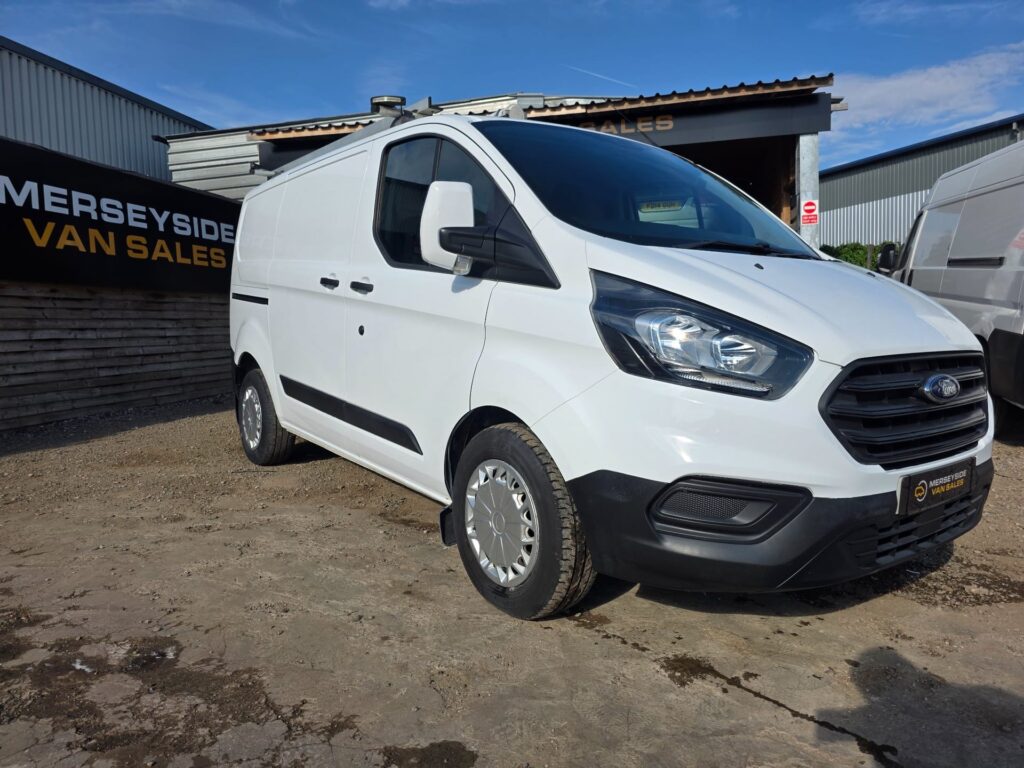
The current Ford Transit Custom is the best medium van on sale, and a jury of European commercial-vehicle journalists said so by giving it Van of the Year. What that actually means is narrower than it sounds: it is a verdict on a brand-new van, judged on payload, driving, efficiency, safety equipment and fleet running costs. It is a genuinely useful signal about where the class has moved. It is not, on its own, a reason to buy any particular used van — and that distinction is what this page is for.
This guide sits under our van reviews, part of the Van Guides hub.
Why the Transit Custom won Van of the Year
The jury that runs the International Van of the Year award is drawn from commercial-vehicle publications across Europe, and it assesses new light commercials on a fixed set of measures: how much they carry, how they drive, how efficient they are, what safety and driver-assistance technology they bring, how much genuine innovation they represent, and what they cost a fleet across a whole life.
The Custom took it on breadth rather than on one headline feature. It offers the full spread of drivetrains — diesel, plug-in hybrid and fully electric — on one platform, so a business can standardise on a single van across very different duty cycles. It carries a competitive payload in every version. It drives better than anything else in the class. And it brought a genuinely new cab layout aimed at people who work out of the van rather than just drive it.
What is actually new on the current Transit Custom
The headline change is the cab. The steering wheel tilts to become a desk, the passenger seats fold to make a working surface, and the storage is designed around a laptop, a clipboard and a lunch rather than around a road atlas. That sounds like a gimmick until you have spent a winter doing paperwork across a steering wheel.
Underneath, the important changes are structural. The load area is easier to load properly, the load-through arrangement to the front is retained on most versions, and the electric version carries a payload close enough to the diesel that it stops being a compromise for many operators. Driver assistance moved up a generation, which matters for insurance as much as for safety.
The one that will matter most to used buyers in a few years is the drivetrain spread. A model line that sold in real numbers as a diesel, a plug-in hybrid and an electric van will produce a used market with genuine choice — and, being honest, genuine confusion about which one suits a given week.
What the award measures, and what it does not
The criteria are a new-vehicle list and a fleet’s list. Payload, efficiency, technology, innovation, whole-life cost over a three or four-year cycle. Every one of those is a fair measure of a new van.
What no award measures is the thing that decides a used purchase: how the van behaves at eight years old, what a turbo or a clutch costs when it goes, whether an independent garage will happily take it on, and how many are out there so you can be fussy about the one you buy. Those questions have no jury.
Nearly a third of the vans we sell have already passed a hundred thousand miles. That is the world an award-winning new van eventually has to survive, and it is not the world it was judged in.
How close are its rivals?
Closer than an award implies. The Vauxhall Vivaro and the Renault Trafic do the same job for most trades, and on the used market the gap between them narrows further because condition and history start to matter more than the original specification did. The Custom generally drives best and holds its money best; the alternatives usually cost less to get into.
We have set them against each other properly rather than summarise here: Transit Custom against Vauxhall Vivaro is the one most of our customers actually need, and our Transit, Transit Custom and Connect comparison sorts out the three Fords that share a badge — a genuinely common and expensive confusion.
When an award-winning Custom reaches the used market
Realistically, five to eight years before there are enough at the money most working buyers spend. Fleets take them first and run them on a three or four-year cycle, then release them into the trade in batches. Only at that point does an award winner become a used option — and by then it is being judged entirely on things the award never looked at.
There is a second-order effect worth knowing about, because it works in your favour right now. When a new model arrives and takes an award, the outgoing generation loses a little value across the whole used market. That makes the previous Transit Custom — a very good van in its own right, with a huge parts network and a decade of known faults — better value than it was.
What this means if you are buying used now
Buy the previous generation, and buy it on evidence. The award tells you Ford has been getting the medium van right for a long time; it does not tell you anything about the specific van in front of you. Service history, advisory pattern and what the van did for a living decide that, and mileage on its own tells you less than people assume — what counts as too high a mileage on a used van goes through it properly. The free DVSA MOT history service will show you the advisory pattern in about a minute.
We have written the used-buyer’s version of this page separately, because it is a different job: why the Transit Custom still rules covers which years and engines to look for, the faults that matter on a high-mileage example, and the checklist we use ourselves. If you are here to buy rather than to read about an award, that is the page you want next.
Is the Transit Custom worth the extra over a rival?
Often, and for a reason people underrate: you pay more going in and you get more coming out. The gap between a Custom and a less-wanted rival is smaller over the life of the van than the advert prices suggest, because the Custom holds its value better. If you keep vans a long time and run them hard, that matters less. If you change every three or four years, it can wipe the difference out entirely.
What would talk us out of one is a specific van with a thin history. A well-documented rival beats a poorly documented Custom every time, whatever either of them won.
If you are working out which size you need, our guide to choosing the right van is the place to start, and our guide to buying a van covers the process. To see real vans rather than award lists, browse the Fords we have in stock or everything we have available now.
Common questions
Why did the Ford Transit Custom win Van of the Year?
On breadth rather than one feature. It offers diesel, plug-in hybrid and fully electric versions on one platform, carries a competitive payload in all of them, drives better than the class, and brought a cab designed around people who work out of the van. The jury assesses new vans on payload, driving, efficiency, safety technology, innovation and fleet running costs.
Does the award mean I should buy a Transit Custom?
It means the model line is well regarded and that Ford has been getting the medium van right. It says nothing about the individual used van in front of you. Service history, advisory pattern and what the van did for a living decide that, and a well-documented rival beats a poorly documented Custom every time.
What is new on the current Transit Custom?
A completely reworked cab built for working out of the van — a tilting steering wheel that becomes a desk, folding passenger seats and storage designed around a laptop. Underneath, a full drivetrain range from diesel to fully electric, an easier load area, and a generation jump in driver-assistance equipment.
How long until the award-winning Transit Custom is affordable used?
Usually five to eight years, because fleets buy them first and release them together at the end of a three or four-year cycle. In the meantime the arrival of a new model softens values on the outgoing generation, which is what makes the previous Transit Custom good value right now.
Is the electric Transit Custom worth considering used?
If your routes are predictable, largely urban, and you can charge at base, yes — the payload penalty is much smaller than it used to be. If you tow, carry heavy loads over distance, or have no reliable charging, a diesel remains the sensible buy. Judge it on your working week, not on the drivetrain.