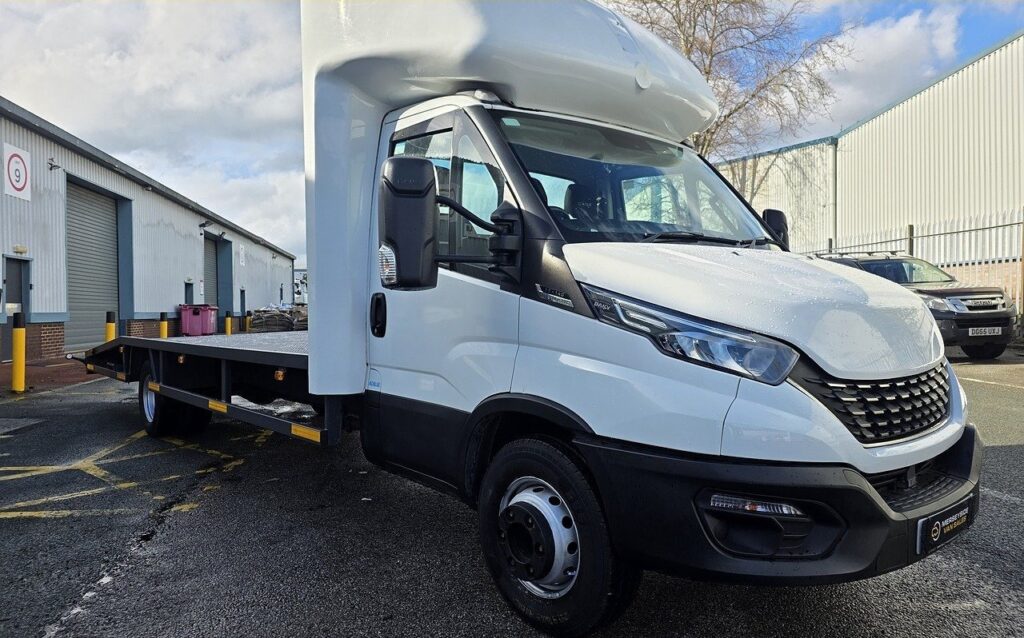
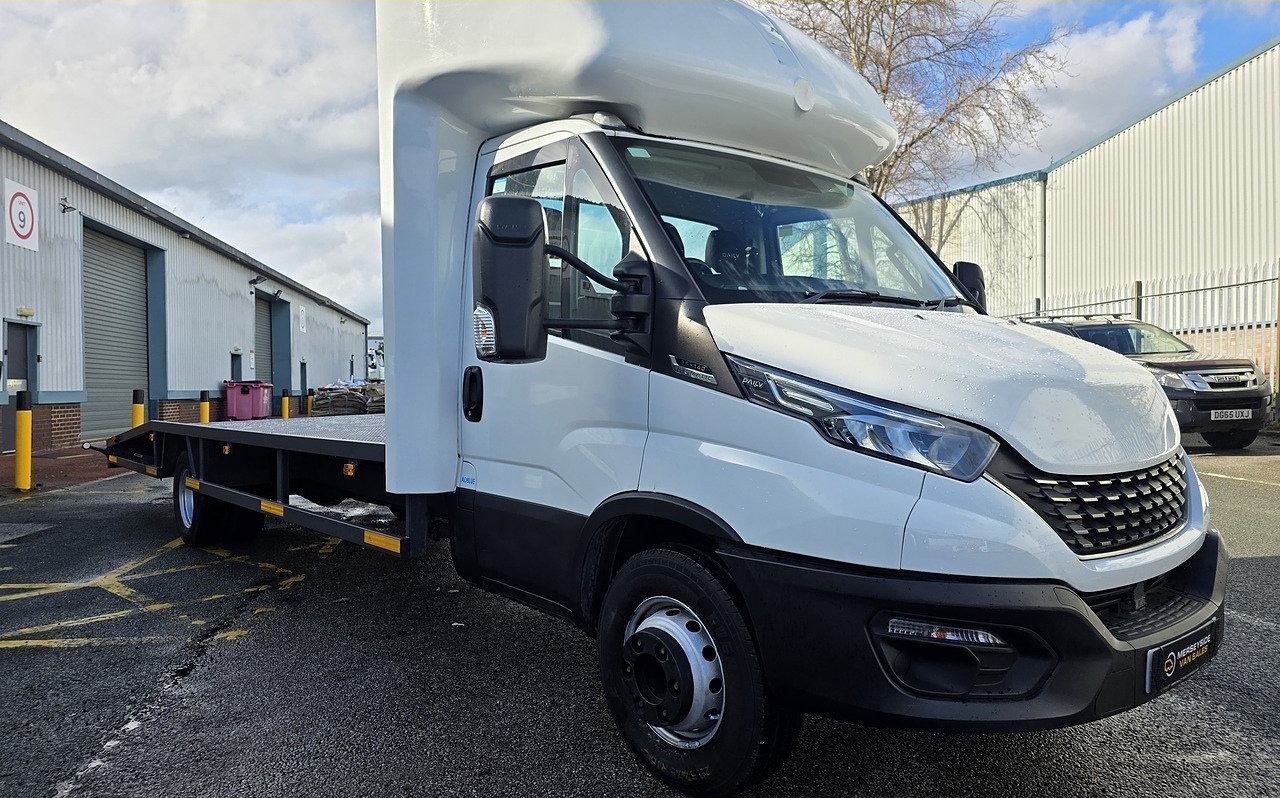
A used Iveco Daily for sale can solve a payload problem overnight, provided you know which version you’re looking at. The range runs from 2.8 tonne panel vans to 7.2 tonne chassis cabs, and engines, gearboxes and payload figures shift hugely between them.
This guide covers what to check by age and mileage, which faults turn up most on an MOT, and realistic used prices across the North West. Get the model right and a Daily will outwork most of the panel van market for another five years.
What should you look for when buying a used Iveco Daily?
Check the model code on the door plate first. A 35S14 is a 3.5 tonne payload-friendly variant, while a 70C is a heavier 7 tonne chassis cab, and the payload gap between them can top 1,500kg. Beyond that, look at three things: cambelt history (the 2.3 and 3.0 litre engines need one every 100,000 miles or five years, and a snapped belt means a full engine rebuild costing £3,000 to £5,000), rear leaf springs on high-mileage courier examples, and evidence of regular DPF cleans on Euro 6 models. A full service history matters more here than on most vans, because parts and labour cost more too.
Which Iveco Daily model years are the safest bet?
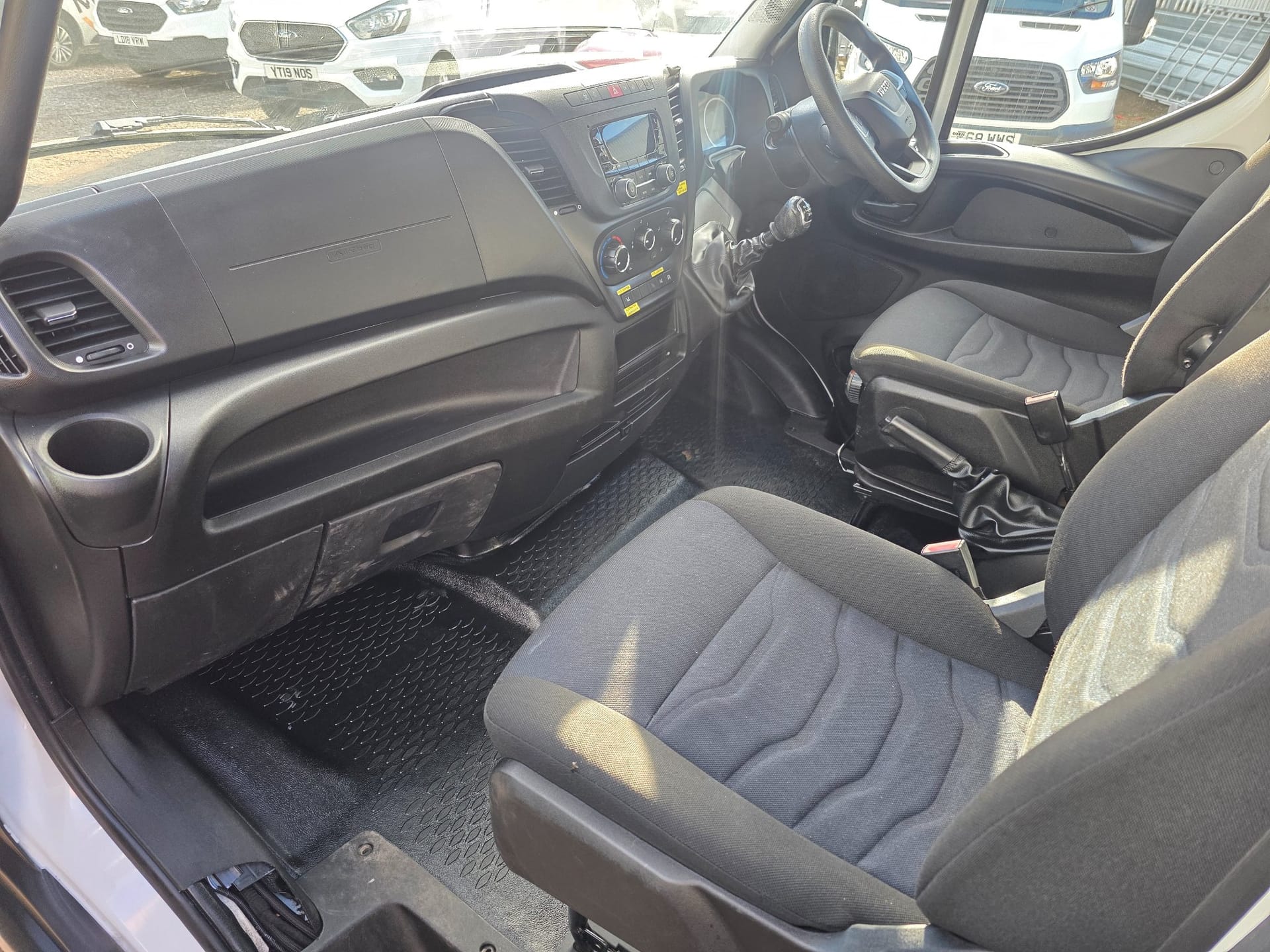
The 2014 facelift brought a new dash, better Euro 5 emissions kit and a stronger gearbox, so vans from 2014 to 2019 are the safest used buy if budget allows. Pre-2014 Daily models (2011 to 2014) had known issues with the EGR valve clogging and injector seals weeping, both roughly £250 to £600 to sort.
From late 2019 the range moved to Euro 6d and gained a Hi-Matic automatic option. It’s a smooth gearbox but expensive to replace if the mechatronic unit fails, typically £2,500 or more. For most tradespeople, a 2016 to 2018 manual 35S14 or 35S16 with full history is the sweet spot: payload around 1,200 to 1,500kg and fewer electronic headaches than the very newest vans.
| Model | Payload | Load Volume | MPG | Used Price Range | Euro Status |
|---|---|---|---|---|---|
| 35S14 (3.5t panel van, SWB) | 1,000-1,250kg | 9.0-11.6m³ | 28-32mpg | £14,000-£19,000 | Euro 5/6 |
| 35S16 (3.5t panel van, LWB/XLWB) | 1,100-1,400kg | 12.0-16.4m³ | 27-30mpg | £15,000-£21,000 | Euro 6 |
| 50C15 (5.0t chassis cab) | 1,800-2,300kg | Body-dependent | 24-28mpg | £16,000-£23,000 | Euro 6 |
| 70C17 (7.0t chassis cab) | 3,000-3,500kg | Body-dependent | 20-24mpg | £19,000-£27,000 | Euro 6 |
What payload and load volume can you actually get?
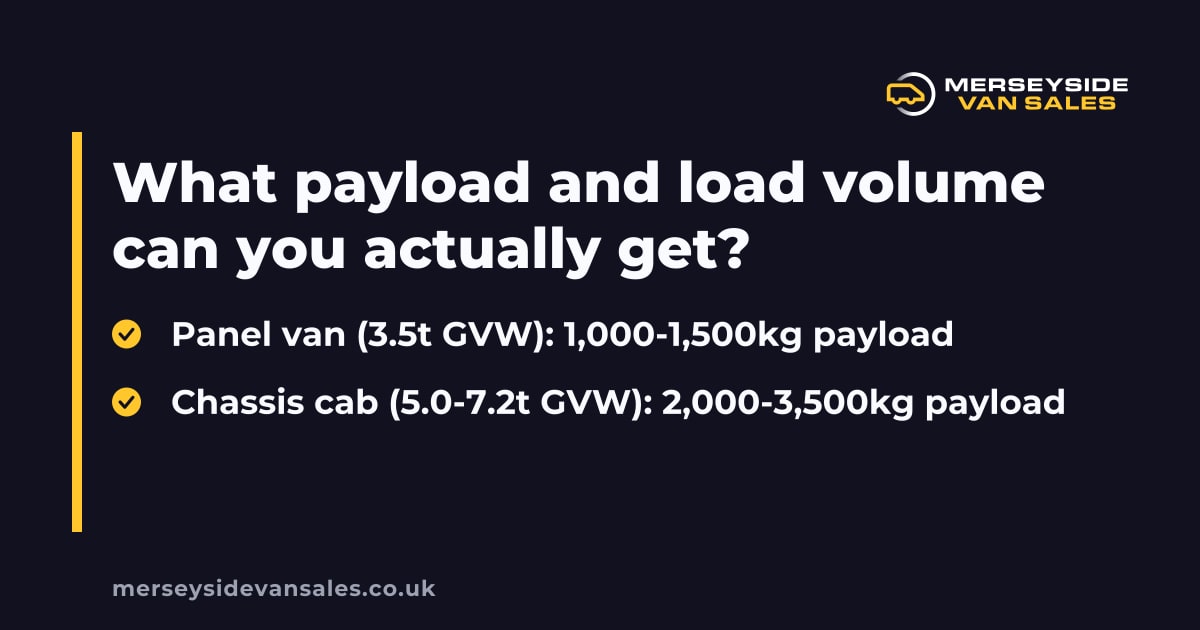
Payload varies more across the Daily range than on any other van, so check the plate figure rather than the brochure number. A 35-plate panel van typically carries 1,000 to 1,500kg with racking and a driver aboard. Step up to a 50C or 70C chassis cab and payload climbs to 2,000 to 3,500kg, but anything over 3,500kg gross needs a category C1 entitlement on your licence, which most car-only licence holders passed after 1997 don’t have.
- Panel van (3.5t GVW): 1,000-1,500kg payload, 9-16.4m³ load volume
- Chassis cab (5.0-7.2t GVW): 2,000-3,500kg payload, C1 licence required above 3,500kg
What fails on an MOT, and what does it cost to fix?
Rust is the biggest killer on high-mileage courier and parcel-fleet Daily vans built before 2016: check the rear chassis legs, sills and the step behind the nearside sliding door where road salt collects. A DVSA MOT check will flag corrosion there quickly, and structural rot found late can write the van off rather than being repairable.
Common mechanical failures include: EGR valve or cooler clogging on 2.3 litre engines (£300-£600), worn rear leaf spring bushes on high-mileage examples (£150-£300 per side), turbo actuator faults on 3.0 litre engines (£400-£900), and DPF blockages from short urban runs (£150 for a forced regen, up to £1,500 for a replacement filter).
What should you budget for a used Iveco Daily?
Expect to pay £14,000 to £19,000 for a 2016-2018 panel van with 60,000 to 110,000 miles on the clock, and £19,000 to £27,000 for a 2019-2021 Euro 6 model with under 80,000 miles. Chassis cabs and tippers with a dropside body add £2,000 to £4,000 over an equivalent panel van.
If you’re buying privately rather than from a dealer, check whether there’s finance owing on the van before you hand over money. Every used Daily we sell carries our warranty as standard, and most buyers spread the cost through van finance rather than paying cash upfront.
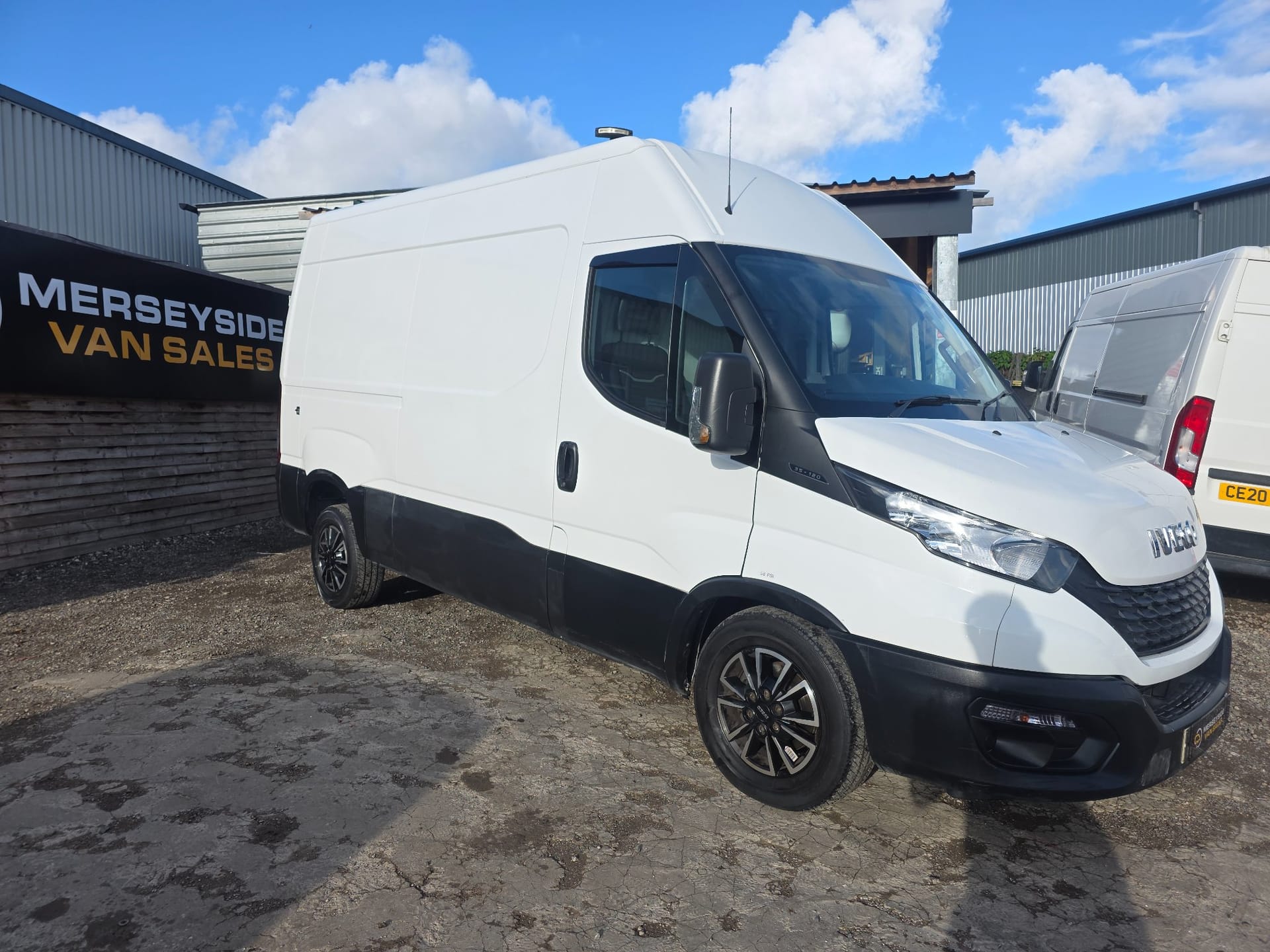
What this means if you’re buying in Merseyside
We’re based at Haydock in St Helens, and Daily part-exchanges land on our forecourt most weeks, usually from local building firms and courier operators upgrading their fleet. The ones that sell fastest are 2016-2019 panel vans with full service history and a genuine reason for the mileage: a plumber’s daily driver rather than a multi-drop parcel van that’s covered 180,000 miles in three years. High-mileage ex-fleet Dailies with patchy history tend to sit on the forecourt for months, whatever the price.
If you’re driving in from Wigan, Warrington or anywhere else across the North West, it’s worth checking the chassis and sills yourself before you commit. Road salt on Merseyside’s coastal routes does the same damage to a Daily as anywhere else. We currently have an Iveco Daily in stock at Haydock, and it’s worth a look if the payload and load volume suit your work.
Common questions
Realistically £14,000 to £16,000 for a 2015-2017 35S14 panel van with 90,000 to 130,000 miles and a full service history. Anything advertised much below that band usually has missing history, a failed cambelt service, or rear axle wear that needs sorting before it goes back to work.
Yes, if the gross vehicle weight is over 3,500kg. Standard car licences (category B) cover up to 3.5 tonnes; anything heavier, like a 50C or 70C chassis cab, needs category C1, which most people passed under the pre-1997 rules or added later through a separate test.
Every 100,000 miles or five years on the 2.3 and 3.0 litre engines, whichever comes first. It’s a bigger job than on a car, typically £400 to £700 including the water pump, but far cheaper than the £3,000-plus rebuild a snapped belt causes.
The Hi-Matic automatic, fitted from 2014 onwards, is smooth and easy to drive in stop-start traffic. Buy one with full service history though, because the mechatronic control unit can cost £2,500 or more to replace if it’s been neglected, a cost the manual gearbox simply doesn’t carry.
Courier and parcel-fleet Dailies often show 25,000 to 35,000 miles a year, so 100,000 to 150,000 miles by year five is normal, not a warning sign on its own. What matters more is whether the cambelt, DPF and rear suspension work has kept pace with that mileage.
Yes, most trade-ins are straightforward if you bring the V5C, service history and MOT certificate. We’ll value your van against the Daily’s price the same day, and it comes off the total rather than being paid out separately.
Related reading
- A Complete Guide to Buying a Used Van: What to Look For
- Avoiding Costly Mistakes When Buying a Used Van in 2025
- Van Buying Article
Looking for your next van?
Buying a Daily used means matching payload to the work and checking history properly, not just kicking the tyres. We hold Iveco Daily stock at our Haydock site in St Helens, inspected before it goes on the forecourt. Come and look at the current van in person, or get in touch if you want the spec talked through first.
Browse our used vans for sale in St Helens →
Talk to us: 0151 272 0326 · WhatsApp · Email
Follow us: 


